Pharmacy
Pharmacy expiry management: how to stop near-expiry stock turning into a write-off
Expired medicines are rarely a surprise; they are near-expiry stock that nobody acted on while there was still time to return or sell it.
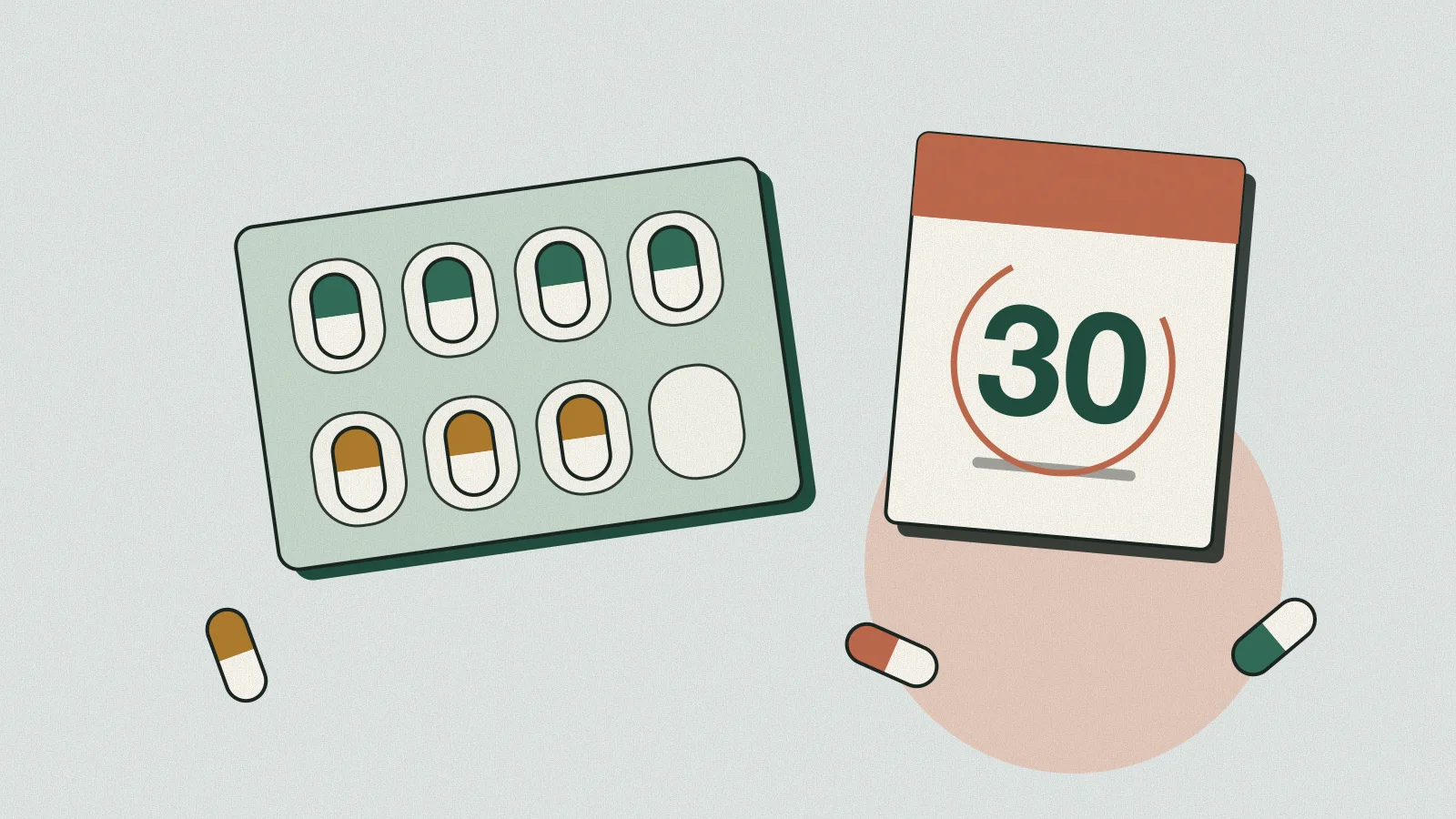
The annual stocktake at a 50-bed hospital pharmacy turns up three cartons of expired stock pushed to the back of the bottom shelf: antibiotics, a few insulin pens that had been in the fridge since monsoon, and a box of a cough syrup that the physician stopped prescribing in spring. At purchase rate it comes to a little over ₹60,000. The distributor's representative takes one look at the dates and says most of it is outside the window his company accepts for expiry claims.
Nobody was careless in the usual sense. The stock was billed in, sold from and counted. What was missing was a routine that looked ahead at expiry dates every month and forced a decision while the medicine could still be returned, transferred or sold. That routine, and the records behind it, is what this guide covers.
What is FEFO and why does a pharmacy need it instead of FIFO?
FEFO means first expiry, first out: always dispense the batch that expires soonest, whatever order it arrived in. FIFO assumes older stock expires first, which is often untrue for medicines. A distributor can send a short-dated batch next week after a long-dated one this week.
In practice FEFO has two halves. On the shelf, place the nearest-expiry batch at the front and the newest at the back, and label bins with the expiry month in large figures. In the billing software, set batch selection to pick the earliest expiry by default, so the counter staff do not have to choose. If the software lets the cashier pick any batch, someone will pick the one on top of the carton, and your FEFO rule exists only on paper.
Insulin, vaccines and other cold-chain items need the same discipline inside the fridge, where stock tends to be shoved in wherever there is space.
What should be recorded at purchase entry to track expiry?
Record the batch number, expiry date, manufacturing date, quantity, free quantity, MRP, purchase rate, GST rate and supplier for every line of every purchase bill. Without batch and expiry at entry, no near-expiry report, FEFO rule or expiry return is possible later.
Some practical points from the receiving counter:
- Enter the purchase from the physical invoice and the cartons together, not from the invoice alone. A distributor's bill can carry a different batch from the strips in the box.
- Set a minimum remaining shelf life for acceptance, for example six months for regular items, and reject or flag anything shorter at the door. Agree this with your distributors in writing.
- Free goods (schemes like 10+1) must be entered as separate quantity on the same batch. If they are not, your stock and your expiry exposure are both understated.
- Most packs show expiry as a month and year. Decide once how your system will treat that, and block sales a little before the date so nothing expires in a patient's hand.
A good test: pick any strip off the shelf and ask the system where it came from. If the answer comes back in seconds with the supplier, bill number and date, your entry is working.
How should a near-expiry report work?
Run it monthly, list every batch expiring within the next 90 days with quantity, value at purchase rate, supplier and last sale date, and sort it into three bands. Each band has a different action, and someone should sign off the list before the next purchase order goes out.
| Expiry band | What it means | Action |
|---|---|---|
| 61 to 90 days | Still saleable, still returnable for most suppliers | Stop reordering the item, move stock to the busier counter or ward, raise a return if sales will not clear it |
| 31 to 60 days | Sell-through unlikely for slow movers | Send to distributor for return or exchange now, inform prescribers of alternatives in stock |
| 0 to 30 days | Too close for most patients to finish a course | Pull from the dispensing shelf, quarantine in a labelled "expiry return" bin, start the claim |
| Expired | Not saleable | Keep segregated and marked not for sale until returned or destroyed, with a record of disposal |
Two columns make this report much more useful than a plain list: the last sale date and average monthly sale. A batch of 200 tablets expiring in 75 days with average sales of 300 a month will clear itself. The same batch with sales of 20 a month will not, and needs action this week.
Expired stock must never sit on a dispensing shelf. Drug inspectors look for it, and a single expired strip given to a patient is a far bigger problem than the value written off.
How do expiry returns to distributors and expiry claims work?
Most manufacturers accept time-expired stock back through the distributor who supplied it, usually under a breakage and expiry policy that sets a time window and a credit basis. Return the stock with a document, get a written acknowledgement, and chase the credit note against your ledger with the distributor.
The commercial terms, such as how many months before or after expiry stock is accepted and whether credit is at purchase rate or a percentage of it, differ by company and by your agreement with the distributor. Get them in writing for your main suppliers, and put the window into your near-expiry routine. If a company only takes returns up to a set period after expiry, your 30-day band has to reach the distributor well before that.
On the GST side, CBIC Circular No. 72/46/2018-GST gives two routes for returning time-expired medicines:
- Return as a fresh supply. A registered pharmacy (not under composition) issues a tax invoice for the return, valued at the original invoice value. The distributor or manufacturer takes ITC on it in the normal way.
- Return against a credit note. The pharmacy sends the goods back on a delivery challan and the supplier issues a credit note. If the credit note is issued within the time allowed in section 34(2) of the CGST Act, the supplier can reduce its tax liability, and the pharmacy must reverse the ITC it took on those goods.
Section 34(2) currently allows credit notes to be declared up to 30 November following the end of the financial year of the original supply, or the date of the annual return if earlier. After that, a credit note can still be issued for the commercial settlement, but the tax cannot be adjusted through it. Check the current position with your chartered accountant, since these dates have been amended before.
What is the GST treatment when expired medicines are written off?
If you destroy or write off expired stock yourself, instead of returning it, section 17(5)(h) of the CGST Act blocks input tax credit on goods lost, stolen, destroyed or written off. So the ITC you took on that stock when you bought it must be reversed in your GSTR-3B.
An illustration: a pharmacy bought a batch for ₹40,000 plus 5% GST, so it claimed ₹2,000 as ITC. A quarter of the batch, worth ₹10,000 at purchase value, expires unsold and the distributor refuses the return. When the pharmacy writes it off and sends it for destruction, it reverses ₹500 of ITC (5% of ₹10,000) in the ITC reversal section of that month's GSTR-3B. The ₹10,000 is a business loss in the books; the ₹500 goes back to the government.
Keep a write-off register with the item, batch, quantity, purchase value, ITC reversed, the date and the method of destruction, signed by the pharmacist in charge. Destruction itself should go through an authorised biomedical waste or pharmaceutical waste agency, with their receipt filed against the register. For how the reversal shows up when GSTR-3B is reconciled with your purchases, see our explainer on GSTR-1 vs GSTR-3B.
What records do Schedule H and H1 medicines need?
Schedule H medicines must be sold only against a prescription from a registered medical practitioner. Schedule H1 medicines, which include several antibiotics and habit-forming drugs, need more: each supply recorded in a separate register at the time of sale, kept for three years and open for inspection.
The H1 register must show the name and address of the prescriber, the name of the patient, the name of the medicine and the quantity supplied. Many pharmacies also note the patient's registration number and the date. A computerised register is common, but it must be complete, printable on demand and not editable after the fact.
Expiry matters here too. An expired H1 batch leaves your stock through a return or destruction, not a sale, and that movement should be traceable from the purchase entry to the return challan or destruction record. Hospitals that stock essential narcotic drugs must also keep the NDPS Forms 3D, 3E and 3H, which government guidance says are to be preserved for at least two years from the last entry. The Drugs and Cosmetics Rules are amended from time to time, so check the current text on the CDSCO website or with your state drugs controller.
How should reorder levels account for expiry?
Reorder on actual consumption, not on habit, and cap each order so the quantity can be used well before the shortest likely expiry. For slow movers, order smaller quantities more often, even at a slightly worse scheme, because a free strip that expires is not free.
A simple rule works for most counters. Reorder level equals average daily sale multiplied by the supplier's lead time in days, plus a safety stock of a few days. Maximum order equals what you sell in 30 to 45 days for fast movers and less for slow ones. Look at the last six months of sales by item and mark anything that has not moved in 90 days; those items should not be on the next purchase order at all. Our guide to setting reorder levels works through the arithmetic in more detail.
Watch the doctor factor in a hospital pharmacy. When a consultant leaves or changes a preferred brand, the old brand becomes a slow mover overnight. Ask the medical superintendent's office to tell the pharmacy about such changes, and check the near-expiry list against the current prescribing pattern.
Software makes this far easier than a register and a ledger. Whatever you use should record batch and expiry at entry, pick FEFO by default at billing, print the 90/60/30 report and track returns against credit notes. For hospitals, the pharmacy module in Healthixio (made by Kentron Technologies, the publisher of this site) is one option built around batch and expiry tracking; standalone medical stores have similar features in most GST billing software.
A monthly expiry control checklist
- Run the near-expiry report on the first working day of the month and sort into 90, 60 and 30-day bands.
- Remove anything within 30 days from the dispensing shelf to a labelled return bin.
- Raise returns to each distributor for the 31 to 60-day band and get written acknowledgement.
- Match last month's returns against credit notes received; follow up anything pending over 30 days.
- Check that no item on the near-expiry list appears on this month's purchase order.
- Record write-offs in the write-off register and post the ITC reversal for the month's GSTR-3B.
- Spot-check ten random strips on the shelf for batch and expiry against the system.
- Check the Schedule H1 register is complete for the month and signed.
Do this every month for a year and the next stocktake will still find some expired stock. It will be a few strips, not three cartons, and most of it will already be on its way back to the distributor.
Questions readers ask
How many months before expiry should medicines be returned to the distributor?
It depends on the manufacturer's breakage and expiry policy and your agreement with the distributor, so ask each main supplier for their terms in writing. As a working practice, many pharmacies start returns when stock is 60 to 90 days from expiry, which leaves time for the paperwork to go through before the company's window closes.
Do I have to reverse ITC if the distributor takes the expired stock back?
If the supplier issues a credit note within the section 34(2) time limit and adjusts its tax, you must reverse the ITC you took on those goods. If you return the goods on your own tax invoice as a fresh supply, you charge GST on that invoice instead. Either way, discuss the route with your distributor so both sides record it the same way.
Can expired medicines be kept in the pharmacy until they are returned?
Yes, but they must be segregated from saleable stock, clearly marked as expired and not for sale, and recorded in your system. Keep them in a separate labelled bin or cupboard, away from the dispensing area, so they cannot be picked by mistake.
How long must a Schedule H1 register be kept?
The register must be maintained for three years and be open for inspection. It records the prescriber's name and address, the patient's name, the medicine and the quantity supplied. A computerised register is acceptable if it is complete and can be produced when an inspector asks.
What is the difference between FEFO and FIFO in a medical store?
FIFO dispenses the stock that arrived first, while FEFO dispenses the stock that expires first. For medicines, FEFO is the safer rule because a later delivery can carry an earlier expiry date. Set your billing software to choose batches by earliest expiry automatically.
Sources
- 1.CBIC Circular No. 72/46/2018-GST: procedure for return of time-expired drugs or medicines
- 2.CGST Act, 2017, section 17 (blocked credits) on the CBIC tax information portal
- 3.CGST Act, 2017, section 34 (credit and debit notes) on the CBIC tax information portal
- 4.NHSRC: Schedule H1 register format and NDPS forms (Attachment A)
Sanjeevani Prime is published by Kentron Technologies, which also makes Healthixio and Tatva ERP. Where an article mentions those products, we say so. This article is general information, not medical, legal or tax advice; rules change, so check the sources above before acting. Read our editorial policy.
Keep reading
Digital health
ABDM for hospitals: what registration actually involves for a small hospital or nursing home
Two registries, one patient ID, a software step you don't control and a front-desk habit you do: here is how the pieces fit for a 10 to 50 bed hospital.
22 November 2026 · 9 min read

Diagnostics
How to reduce turnaround time in a pathology lab, one stage at a time
Most of the delay in a lab report happens outside the analyser, and you only find it once every stage carries its own timestamp.
22 November 2026 · 10 min read
Billing & insurance
TPA claim rejection at small hospitals: why cashless claims get queried or cut, and how the billing desk prevents it
Most cashless losses are decided at admission and on discharge day, not by the TPA's medical officer, so the fixes belong at the billing desk.
22 November 2026 · 8 min read